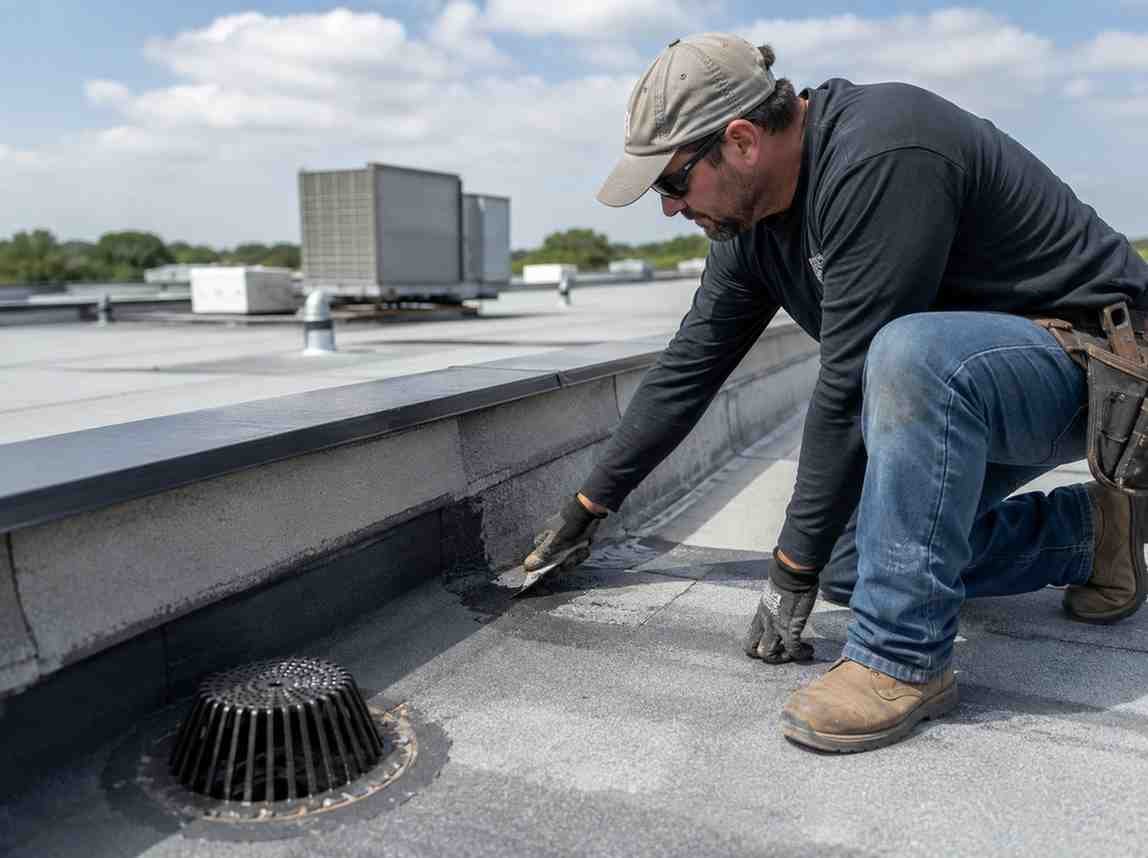
Before you decide how much to set aside for your roof next year, find out what needs attention now. Last year’s repair bills offer a starting point, but your roof’s current condition should guide the budget.
A commercial roof inspection helps you identify immediate repairs, plan upkeep, and prepare for larger work. At Pivot Roofing & Solar, we explain the findings before recommending a solution. Schedule your commercial roof inspection in Southlake or elsewhere across DFW before you finalize the numbers.
Why should you inspect the roof before setting a budget?
A roof inspection helps you base next year’s spending on what needs attention now. It helps you:
- Identify problems before leaks appear. An inspection can uncover visible wear, drainage issues, and damaged areas that need attention.
- Review recurring repair costs. If the same leak keeps returning, ask what caused it and whether the next repair will address that cause.
- Leave time for informed decisions. Schedule Southlake roofing inspections ahead of your budget approval deadline so you can review findings, clarify the work needed, and compare estimates.
What should a commercial roof inspection check?
The inspection should identify the roof’s condition, the areas that need attention, and any questions that require further investigation. Our professional roofing inspection service in Fort Worth includes assessments of flat and low-slope commercial roofs.
Review the roof’s main components
Key areas include:
- Roofing membrane: The protective roof covering, including visible damage and wear.
- Seams and flashing: Joints and protective details around edges, walls, and roof openings.
- Drainage: Drains, gutters, and areas where water collects.
- Rooftop equipment areas: Roofing around vents, pipes, and equipment supports.
Bring records that help explain the findings
Before the visit, gather:
- Past inspection reports and repair invoices.
- Installation dates and warranty documents, if available.
- Leak photos, dates, and notes from tenants.
- Details of planned HVAC or solar work.
Missing records do not prevent you from requesting an inspection. Tell the contractor what you know and which details you cannot confirm. Share interior leak locations too. GAF’s commercial inspection guidance explains why interior conditions, exterior walls, and the roof surface all matter when investigating water entry.
Ask for photos, marked problem locations, recommended actions, and a list of areas the inspector could not assess. A visual inspection cannot confirm every concealed condition. If the contractor recommends further investigation, ask what question it will answer and whether it carries a separate cost.
How do you turn inspection findings into a roof budget?
Review the findings with your contractor, then request costs and timeframes for the recommended work. An inspection report and a priced proposal serve different purposes; confirm whether your appointment includes both. Avoid putting every recommendation into one “roof repairs” total.
Separate the money into four categories
| Budget category | What belongs here | What to clarify |
| Urgent repairs | Active leaks or damage requiring prompt action | What needs attention now, and why? |
| Scheduled upkeep | Agreed maintenance for a serviceable roof | What work does the price include? |
| Future major work | Larger repairs or replacement planning | What evidence supports the timing? |
| Contingency | An allowance for unexpected work | Which uncertainties could change the cost? |
Keep the contingency separate from the priced work. Discuss the allowance with whoever approves your budget, using known risks and unresolved questions rather than an arbitrary percentage. Avoid counting the same repair in two categories.
Keep different roof sections separate
A building can have an older original roof and a newer addition. Ask for findings by section so one overall condition rating does not hide different needs. Use the same approach across a property portfolio: compare the urgency of each issue, not just each building’s roof age.
Build a short approval record
For each item, record:
- The roof section and observed problem.
- The proposed action and reason for its priority.
- The estimated cost, assumptions, and exclusions.
- The target date and person responsible for approval.
Consider a hypothetical building with two roof sections. One has a recurring leak above occupied offices; the other has visible wear but no confirmed leak. Ask the contractor to explain each section’s condition and urgency before you divide the budget. Equal roof areas do not automatically need equal spending.
For roofs that remain suitable for continued use, our roof maintenance services focus on the upkeep needs we identify and the work you approve.
What should you check before comparing roof estimates?
Compare the work included, not just the total price. Building access, operating hours, and unresolved conditions can all affect a proposal. Check whether each estimate accounts for:
- Access: Lifts, restricted roof access, or occupied areas below the work.
- Business hours: Work around deliveries, customers, or sensitive operations.
- Other trades: Coordination with HVAC or solar contractors where necessary.
- Hidden conditions: How the contractor will price and seek approval for additional work.
- Other included costs: Cleanup, disposal, and any applicable permit costs.
Ask how long the estimate remains valid, especially if you plan to schedule work months later. A planning estimate helps you allocate funds; confirm the final scope and price before authorizing the job.
If another contractor will replace rooftop equipment, discuss the order of work before setting dates. Clarify who will handle the surrounding roof details and who will check them afterward. That coordination belongs in the plan before you approve separate jobs.
Also check whether two bids address the same roof sections and problems. If one bid includes only a temporary repair and another addresses the underlying problem, the totals do not represent the same solution.
Can you spread roof spending across the year?
Sometimes, but the roof’s condition should guide the schedule. Ask the contractor to distinguish work that needs prompt attention from work you can plan or monitor.
Address current problems first
Do not leave an active leak unattended while waiting for next year’s replacement budget. Discuss targeted roof repairs and ask whether they provide a suitable interim solution. GAF’s repair-or-replacement guidance notes that appropriate repairs can sometimes give owners time to plan for replacement, depending on the findings.
Set review dates for deferred work
For anything you postpone, record a follow-up date and the changes that should trigger another assessment. Ask what could happen if you wait and whether the temporary approach creates repeat costs.
Treat any remaining-life estimate as a planning judgment, not a guaranteed replacement date. Keep longer-term funding separate from this year’s upkeep so an aging roof doesn’t disappear from the budget after a small repair.
How can Pivot help you plan the next step?
Our roof inspection services in Southlake and across DFW help you understand the roof’s condition before committing to work. Bring your budget deadline and property records so we can discuss your priorities alongside the findings.
Book your inspection with Pivot Roofing & Solar before your budget review. Get clear recommendations for the work your property needs.
What else should property owners know?
Can my business stay open during the inspection?
That depends on access requirements and conditions at the property. Share your operating hours and restricted areas when booking so we can discuss any disruption beforehand.
Does a roof warranty remove the need to budget for upkeep?
No. Check your warranty’s maintenance duties, exclusions, and reporting requirements. Coverage does not automatically pay for routine care or every problem an inspection finds.
Can I request a free roof inspection in Keller?
Yes. Pivot offers a free roof inspection in Keller. Explain your building type and budgeting needs when booking. Confirm what the visit includes and what information you will receive.
Should I request a hail damage roof inspection in Southlake if nothing leaks?
Yes. Hail damage may not cause an immediate leak. An assessment can help identify damage that changes your existing spending priorities.
Can you also help with residential properties in my portfolio?
Yes. If your portfolio includes homes, ask us about a residential roof inspection in Colleyville. We assess residential and commercial properties according to their roofing needs.
Can I arrange inspections for buildings in different DFW cities?
Yes. We provide roof inspections in Southlake and nearby DFW communities. Share each address so we can confirm coverage and discuss scheduling for each property.